
What to Expect After Your Appointment
You've just had your osteopathy appointment. Now what?
Some people leave their appointment feeling more comfortable or moving more freely. Others notice very little immediate change, or experience some temporary tenderness before things settle, because we are human with different past experiences and pain perceptions.
Is it normal to feel sore after osteopathic treatment?
It can happen, but it doesn’t always. Temporary tenderness or soreness can occur following osteopathic treatment.
During your appointment, we may have used a combination of hands-on techniques, including soft tissue treatment, joint mobilisation, stretching or other techniques suited to your presentation.
Afterwards, it is possible you could notice:
Mild muscle soreness or tenderness in the areas treated
A feeling similar to having completed an unfamiliar workout
Temporary stiffness or sensitivity with certain movements
A change in how your usual symptoms feel
Mild fatigue or feeling more relaxed than usual
Not everyone experiences these responses. Many people will not experience this at all.
When post-treatment soreness does occur, it commonly begins within the first 24 hours and settles over the following day or two, although the duration can vary.
Mild, short-lived soreness is not necessarily a sign that something has gone wrong. However, it also isn't something that needs to happen for treatment to be effective.
If your symptoms are severe, progressively worsening or feel significantly different from your usual presentation, please get in touch or seek urgent care rather than assuming this is normal.
Why might I feel tender after treatment?
Hands-on treatment involves applying pressure, movement or loading to muscles, joints and surrounding tissues.
Depending on the techniques used and your individual sensitivity, this may temporarily increase local tenderness.
Some areas may already be sensitive before your appointment, particularly if you've been experiencing pain for some time.
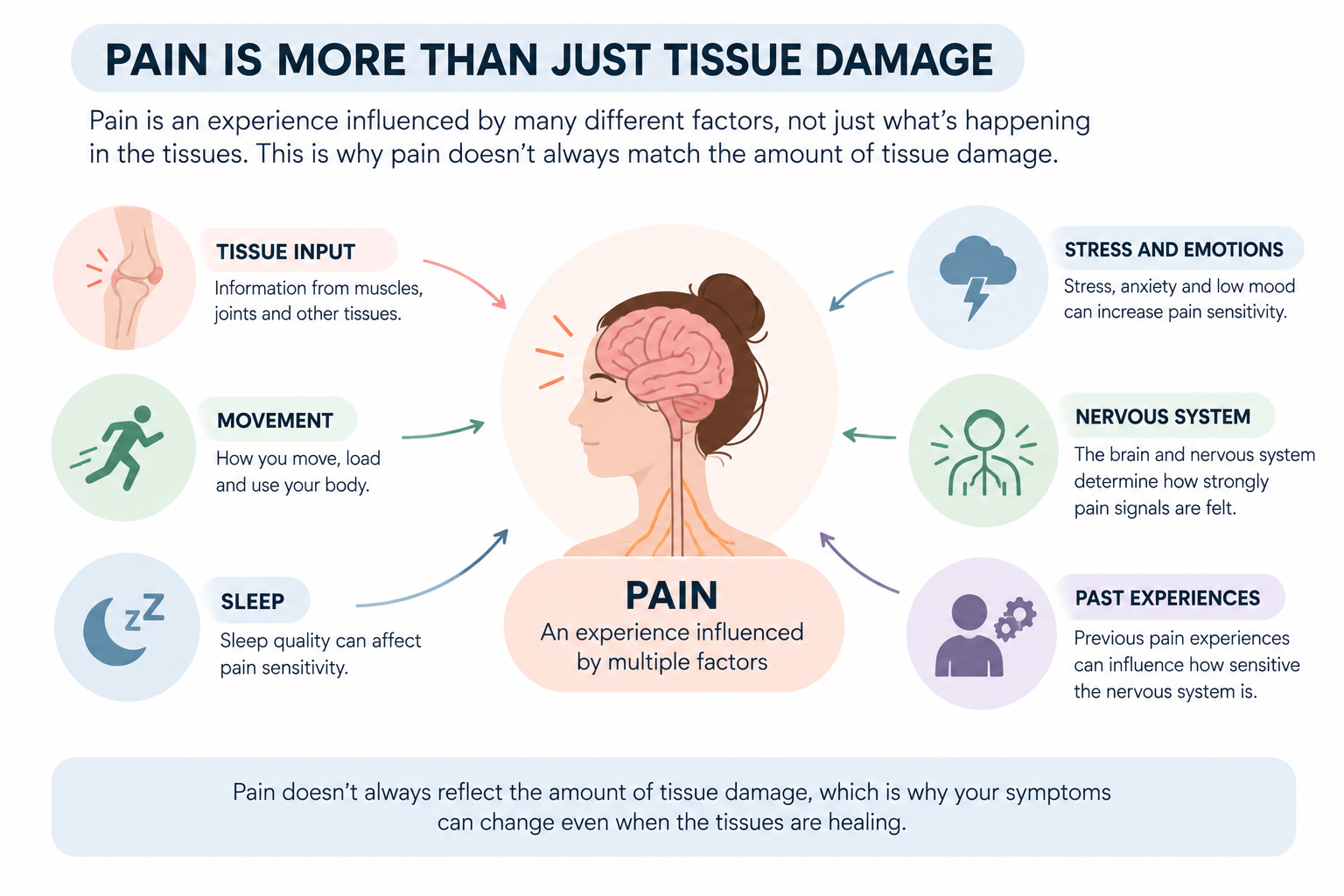
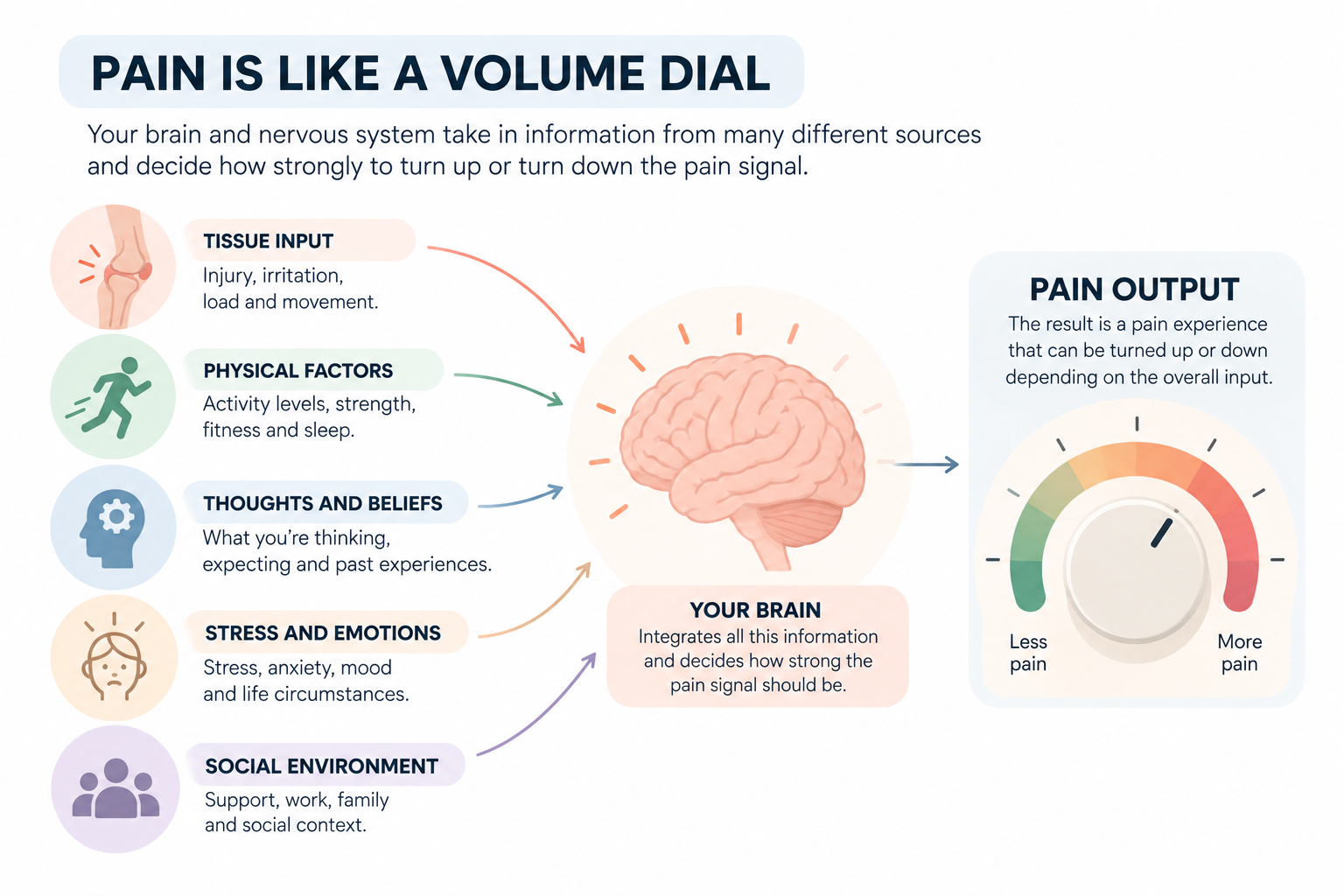
It's also worth remembering that pain and sensitivity are influenced by more than the tissues themselves. Sleep, stress, recent activity and your overall symptom irritability may affect how you feel after treatment.
Post-treatment soreness does not mean your muscles are releasing toxins, that your body is detoxifying or that treatment has to hurt to be effective.
And on the other hand, more soreness doesn't necessarily mean a better treatment.
What should I do after my appointment?
Keep moving
You generally don't need to spend the rest of the day resting in bed.
Gentle, comfortable movement can be a good way to manage stiffness and
maintain confidence with movement.
Depending on your presentation, this might include:
Going for a comfortable walk
Moving through your usual daily activities
Gentle mobility exercises
Changing positions regularly if you've been sitting for a while
Completing any specific exercises recommended during your appointment, once you feel comfortable to do so. It can be advisable to wait until painful symptoms have settled if
There's no need to force movements or push through significant pain.
Modify activity if needed
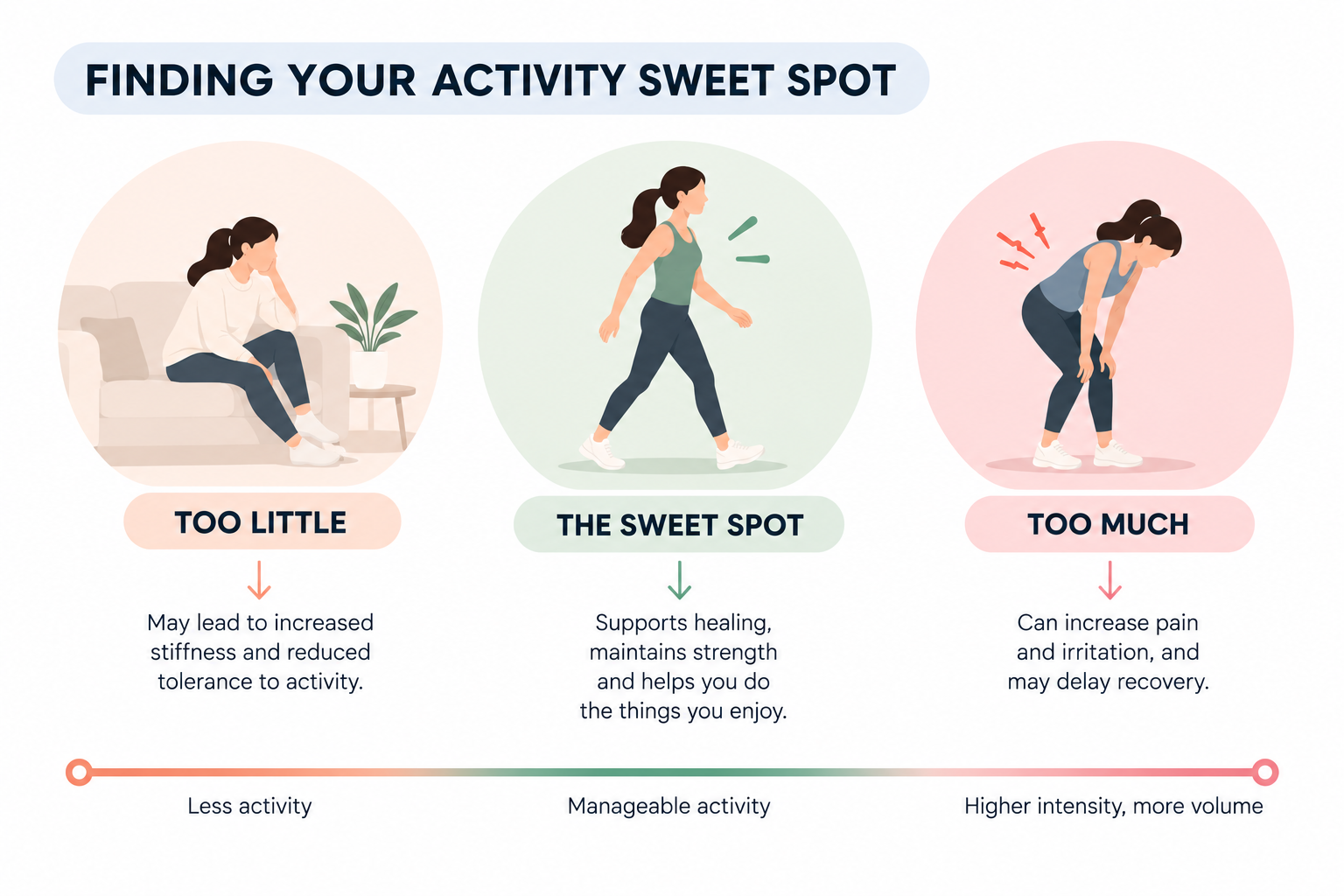
You don't necessarily need to avoid exercise after osteopathic treatment.
However, if you're feeling particularly tender, it may be worth temporarily reducing the intensity, duration or volume of your usual training.
For example, you might choose a comfortable walk or a lighter gym session rather than a heavy strength workout.
If your appointment involved an acute injury or particularly irritable symptoms, we may have discussed more specific activity modifications.
The advice provided during your consultation should always take priority over general recommendations.
Try heat or cold if it helps
If you're experiencing muscle tightness or general soreness, a warm shower or heat pack may provide some temporary comfort.
Some people prefer a cold pack, particularly when an area feels acutely irritated.
Neither is essential for recovery, so you can choose whichever feels more comfortable.
Use a protective layer between your skin and the pack, limit application to short periods and avoid extreme temperatures.
Prioritise sleep and your usual routine
Sleep plays an important role in general health, pain regulation and recovery.
You don't need a special recovery routine after osteopathic treatment, but maintaining adequate sleep, regular meals and normal hydration is sensible.
There's no evidence that you need to drink excessive amounts of water to flush out toxins following manual therapy.
Should I do my exercises straight away?
If you've been given a home exercise programme, the aim is usually to support your recovery between appointments.
Your exercises might focus on mobility, strength, control, balance or gradually increasing tolerance to activities that have become uncomfortable.
When to start, how frequently to complete them and how challenging they should feel will depend on your individual presentation.
A few things to keep in mind:
Start with the dosage recommended during your appointment.
Focus on comfortable, controlled movement rather than forcing a particular range.
Some mild discomfort may be acceptable for certain rehabilitation exercises, depending on your condition.
If an exercise causes a significant increase in symptoms or leaves you noticeably worse afterwards, it may need to be modified.
More repetitions or more intensity aren't automatically better.
You shouldn't feel that you need to push through worsening pain to get results.
If you're unsure whether an exercise is appropriate, or something doesn't feel quite right, please get in touch. We can review the exercise and adjust it if needed.
What if I don't feel better straight away?
Not everyone experiences immediate pain relief following treatment, and that doesn't automatically mean your appointment hasn't been helpful.
Pain is only one part of the picture.
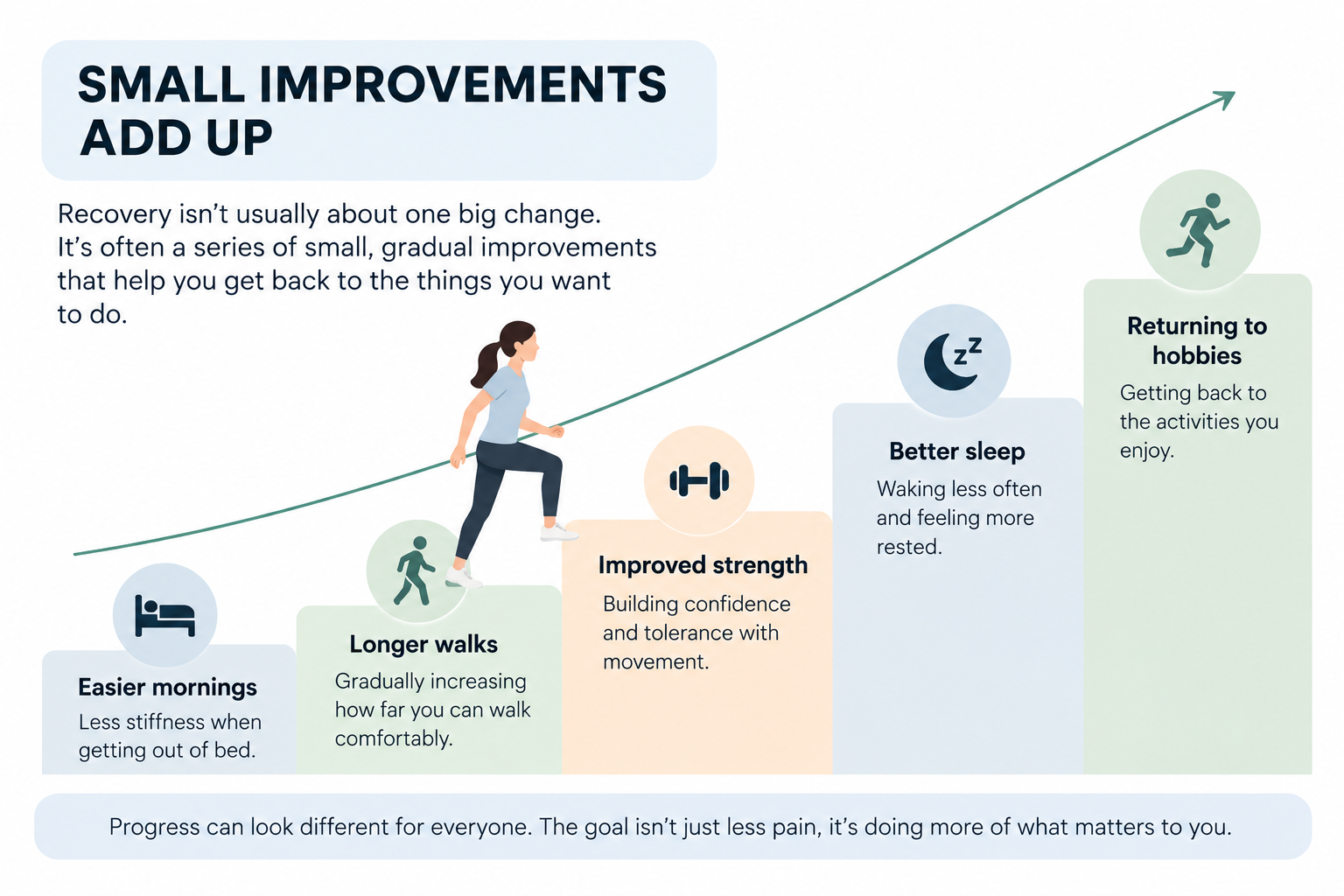
Sometimes the first changes people notice are more subtle, such as:
Being able to move a little more comfortably
Feeling less stiff
Functional activities can be done for longer before symptoms become noticeable
Returning to an activity with greater confidence
Experiencing fewer symptom flare-ups
Pain doesn’t last as long as it was previously, or changes and becomes a more
specific spot rather than a general area (localising).Recovering more quickly after physical activity
Sleeping more comfortably
These changes can be useful signs of progress, even when pain hasn't completely settled yet.
That said, improvement isn't guaranteed, and it's important that we continue to evaluate whether your treatment and management plan are actually helping. There are many contributing factors to recovery times may differ for everyone.
If you're not noticing meaningful progress, we may need to reassess the contributing factors, modify your exercises, change our approach or consider whether further investigation or referral is appropriate.
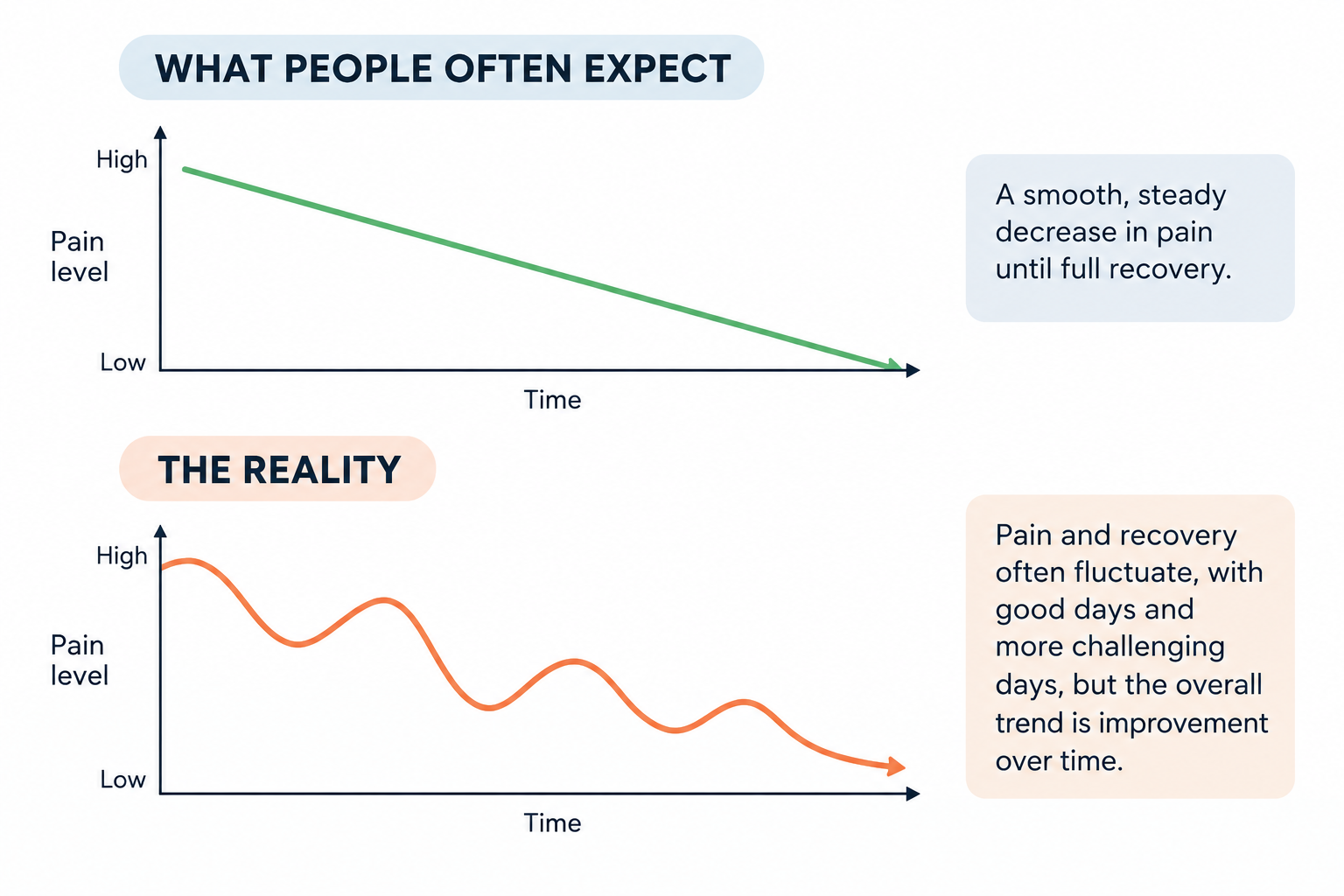
Can my symptoms fluctuate after treatment?
Yes. Symptoms can fluctuate, both with and without treatment.
You might have a day where things feel noticeably better, followed by a day where your usual symptoms are more apparent.
This can be influenced by activity, sleep, stress, workload and the underlying condition.
A temporary fluctuation doesn't mean you've gone backwards.
Rather than judging progress from one particular hour or day, it can be useful to consider the overall pattern across time.
Are you gradually tolerating more activity? Are flare-ups becoming less frequent? Are everyday tasks becoming easier?
However, a new or substantial increase in symptoms shouldn't automatically be attributed to a normal fluctuation. If something feels unusual or concerning, it's worth having it reviewed.
Is there anything I should avoid after treatment?
There isn't a universal list of activities you need to avoid after osteopathy.
In most cases, you can continue your usual daily activities, making adjustments based on your symptoms and the advice provided during your appointment.
A few general considerations:
Avoid repeatedly testing painful movements just to see whether they still hurt.
Don't force aggressive stretching into an already irritated area.
Consider temporarily reducing activities that substantially aggravate your symptoms.
Avoid doing significantly more exercise than usual simply because you're feeling better immediately after treatment.
Follow any specific precautions discussed during your appointment.
You don't need to be overly protective of your body. The aim is to find an appropriate balance between staying active and allowing symptoms to settle.
What if I feel worse after my appointment?
A mild, temporary increase in tenderness can occur after hands-on treatment.
However, there is a difference between expected short-term soreness and a significant worsening of symptoms.
Please contact the clinic if:
Your pain is noticeably worse and isn't beginning to settle
You experience new symptoms that weren't present before treatment
Your usual activities become significantly more difficult
Your exercises are consistently aggravating your symptoms
You're concerned about how you're responding to treatment
We can discuss what you're experiencing and determine whether your management plan needs to be adjusted or whether further assessment is appropriate.
Seek urgent medical attention for symptoms such as new or progressive limb weakness, difficulty walking, loss of bladder or bowel control, or numbness around the groin or saddle region.
Following neck treatment, sudden severe or unusual headache or neck pain, particularly with dizziness, visual disturbance, difficulty speaking, swallowing or walking, facial drooping or limb weakness, requires emergency assessment.
In Australia, call 000 for emergency symptoms.
How many appointments will I need?
The answer depends on your presentation, how long you've been experiencing symptoms, your goals and how you respond to treatment and rehabilitation.
Someone presenting with a recent episode of neck stiffness may have very different needs from someone managing persistent back pain or returning to sport after an injury.
At Osteo Wellness Studio, appointments aren't about keeping you coming back indefinitely.
My approach is to combine hands-on treatment, education and individualised exercise rehabilitation where appropriate, with the aim of helping you manage your symptoms and build confidence in your movement.
We'll discuss whether follow-up treatment is appropriate, what we're working towards and how we'll assess your progress.
As things improve, appointments may become less frequent, or you may no longer need them.
When should I book my next appointment?
Your recommended follow-up timeframe will depend on your individual presentation.
For some patients, a review within a week or two may be useful to reassess symptoms, progress exercises and determine whether the initial management plan is appropriate.
Others may benefit from a longer interval, or may not require another appointment.
If your symptoms have settled and you're managing well, an additional appointment may not be necessary.
If you're not improving as expected, or your symptoms change significantly, it's worth getting in touch rather than simply waiting for your next scheduled appointment.
A few common questions
Should I rest for the remainder of the day?
Not necessarily. Most people can continue their usual activities, with
modifications if they're feeling sore or have been advised to reduce certain activities.
Can I go to the gym after osteopathy?
Often, yes. This depends on your symptoms, the treatment provided and the type of exercise you're planning. If you're feeling tender, reducing the intensity or modifying your session may be sensible.
Is it normal to feel tired after treatment?
Some people report feeling tired or relaxed after an appointment. This is not universal, and significant or persistent fatigue should not automatically be attributed to treatment.
Does soreness mean the treatment worked?
No. Post-treatment soreness is not a reliable indicator of treatment effectiveness. Progress is better assessed through changes in symptoms, movement, function and your ability to participate in everyday activities.
What if my exercises hurt?
It depends on the exercise and your condition. Some rehabilitation programmes allow for mild, manageable discomfort. However, significant, escalating or persistent aggravation may indicate that the exercise needs modifying.
Can I have a massage or another treatment afterwards?
There isn't a universal restriction, but multiple treatments in a short period may make it harder to identify what is contributing to any soreness or symptom changes. If you're planning additional treatment, it's worth discussing whether it is appropriate for your presentation.
Still have questions?
It's completely understandable to have questions after your appointment, especially if you're experiencing symptoms you haven't had before.
If something doesn't feel right, you're unsure about your exercises or you'd like clarification on your treatment plan, you're welcome to contact the clinic.
At Osteo Wellness Studio, the aim is for you to feel informed and involved in your care, both during your appointment and afterwards.
Osteo Wellness Studio
Burleigh Waters, Gold Coast

Dr Natalie Ryan (Osteopath) ⋆ ☾⋆
⋆ Masters of Osteopathic Medicine
⋆ Bachelor of Clinical Science
⋆ Clinical Pilates Rehabilitation Practitioner
1/6-8 Classic Way, Burleigh Waters, QLD, 4220
Osteo Wellness Studio operates from within Back in Motion Burleigh Waters but is a separate business.
PHONE: 07 5613 3115
FAX: 07 5613 3116
EMAIL: reception@osteostudio.com.au